


Marble Sort! - Color Puzzle
4.71.89K Reviews
App Specs
- Version
- 1.19.01
- Updated On
- License
- Free
- Downloads
- 10,000,000+
- Developer
- VOODOO
- Categories
- Puzzle
- Platform
- Android
Screenshots
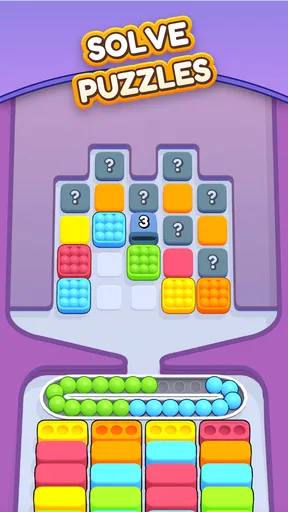
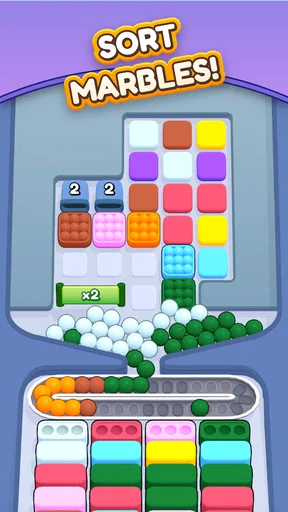
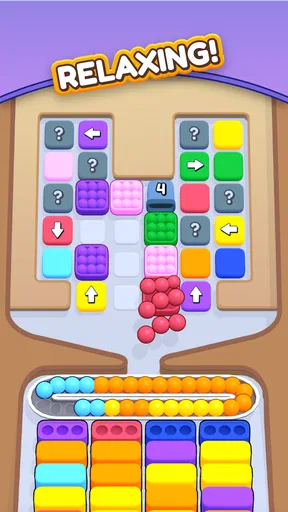
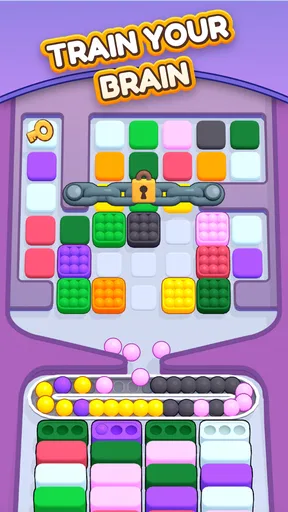
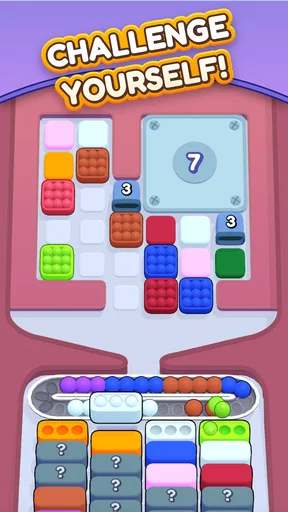
 Analysis by AppCompare
I like Marble Sort! most when I want a small puzzle to focus on without turning a quiet moment into a demanding gaming session. It is a free puzzle game from VOODOO, built around moving colored marbles into matching tubes. The idea is easy to grasp, but the challenge comes from thinking ahead: a move that looks useful now can leave fewer good options a few turns later.
A good fit for short, focused breaks
This is the sort of game I would open while waiting for a drink, taking a breather between tasks, or settling in before bed. A level gives me a clear little objective, and the sorting theme makes progress easy to read at a glance. It suits people who enjoy untimed logic puzzles and prefer working through a problem at their own pace to reacting quickly or competing against others.
In a typical everyday session, I might start a level while waiting for a meeting to begin, make a few careful moves, then put the phone away when it is time to go. The puzzle’s visual state is straightforward enough that I can understand what I was doing when I return, though I still prefer to finish a level rather than leave a half-solved arrangement sitting in my mind. That makes it a better fit for small pockets of attention than for a long commute where interruptions are constant.
Build a repeatable sorting routine
The useful habit here is to treat empty space as a resource, not just a place to park a marble. Before moving anything, I scan the tubes for colors that are already close to being grouped and look for a move that opens room without burying a color I will need soon. That quick check helps avoid the common trap of filling a tube early and then discovering it would have been more valuable as temporary workspace.
I also find it helps to work in stages: first create breathing room, then gather one color where it can be completed, and only then turn attention to the next group. When two choices appear equally reasonable, I favor the one that leaves more different next moves available. It is a modest planning rule, but it makes the puzzle feel less like random shuffling and more like a sequence I can reason through.
There is a trade-off to that approach. Planning every possible continuation can make a relaxing game feel like homework, while moving purely by instinct can create a cluttered board. I aim for a middle ground: pause briefly before a move that uses a scarce empty slot, but keep the rest of the session light. If I reach a position where I cannot see a useful next step, stepping away is often more enjoyable than repeatedly making changes just to stay busy.
Check the experience that suits you
The game’s Teen age rating is worth noticing if you are choosing something for a younger player, and the game is free to download with optional in-app purchases priced from $0.99 to $99.99 per item. I would check the purchase prompts before handing over a device, especially if it is shared with a child. Those prices span a broad range, so it is sensible to treat optional spending as a separate decision rather than part of the basic puzzle experience.
Worth Reading Before You Choose

EA SPORTS FC Mobile 26 Is a Bigger Football Game, but It Takes Time

Flipboard Shows What News Apps Must Do Beyond the Feed

Switching to Android Auto Means Rethinking Your Driving Routine

Google Calendar Makes a Crowded Week Easier to Manage

Ludo King Makes the Most of the Minutes Between Plans

Baby Panda World Brings Quick Play to Modern Phones, but Its Game Library Feels Busy
The current version is 1.1.6 and it requires Android 8.0 or later. Its 4.8 average from around 1,300 ratings, alongside over 100,000 installs, suggests that plenty of players have given it a try; I would still judge it by whether this particular sorting loop suits you. It has received 51 written reviews, and the numbers are context, not a promise that every level or session will feel equally satisfying.
One practical question is whether this is a game to choose for deep, varied puzzle solving. I would say no: its appeal is the repeatable act of sorting, not a broad set of different puzzle formats. Another is whether it works for someone who dislikes being hurried; the relaxed, move-by-move logic is the draw for me. If you want a timer, head-to-head play, or a story that changes the way each puzzle works, a different kind of puzzle game will probably be a better match.
Getting Started
The first thing that caught my eye with Marble Sort! was its simple yet vibrant interface. It’s one of those games where you don’t need a lengthy tutorial to get started. Just dive right in! The main objective? Sort colored marbles into their respective tubes, and trust me, it’s more challenging than it sounds.
When you first open the game, you’re greeted with a clean layout. The colorful marbles are a visual treat, and the soothing background music adds to the overall chill vibe of the game. It’s like meditation, but with marbles!
The Gameplay
The mechanics are straightforward. You have a selection of tubes filled with a mix of colored marbles, and you need to sort them so each tube contains only one color. You can only move one marble at a time, and only onto a matching or empty slot. It’s a classic mix of logic and strategy.
As you progress, the levels get trickier, introducing more colors and tubes. But hey, that’s where the fun lies! It’s like a puzzle that keeps evolving. If you’re a fan of brain teasers, this game is your jam.
Why I’m Hooked
What I truly love about this game is its ability to engage without overwhelming. I mean, who doesn’t love a game that’s both relaxing and mentally stimulating? If you’re someone who enjoys a good challenge without the pressure of a ticking clock, this is it.
Plus, there’s something immensely satisfying about seeing those marbles neatly sorted at the end of a level. It’s the little victories, right?
A Few Tips
- Plan Your Moves: Before you start moving marbles around, take a moment to visualize your strategy. It’s like a game of chess, but with more colors.
- Patience is Key: Some levels might have you scratching your head, but don’t rush. Sometimes stepping away for a bit brings a fresh perspective.
- Trial and Error: Don’t be afraid to experiment with different moves. The game is forgiving, and sometimes a little trial and error can lead to success.
Final Thoughts
In a world full of fast-paced, adrenaline-pumping games, Marble Sort! is a breath of fresh air. It’s perfect for those moments when you want to unwind but still keep your mind active. Whether you’re on a coffee break, winding down in the evening, or just need a mental escape, this game is a reliable companion.
So, if you’re looking for a puzzle game that’s easy to pick up yet challenging enough to keep you coming back, give Marble Sort! a try. You might just find it as addictive as I did!
How it compares with other puzzle choices
Compared with number puzzles, word games, or tile-matching games, this one puts its logic directly on the board: you can see the colors and the available spaces, then reason through the consequences of each move. That makes it approachable when I do not want to remember clues or calculate a score. The flip side is that the core action stays consistent. Players who want fresh rules, a narrative, or a different kind of challenge from level to level may get more variety from another puzzle title.
It is also distinct from quick reflex games. There is no need to tap rapidly to keep up with a moving target; the satisfying part is deciding which color to free and where to place it. I would recommend it to someone who likes sorting tasks and orderly visual feedback, but not to someone who needs constant novelty or a competitive reason to replay.
Where patience helps—and where it can’t
The basic strategy is useful, but it does not make every board effortless. As more colors and tubes enter the mix, it becomes easier to lose track of which space is genuinely available and which one is temporarily holding up another color. I try not to commit to a long chain of moves based on a single assumption. Instead, I make a small sequence, check what it has opened, and adjust from there. This keeps experimentation deliberate rather than turning the board into a tangle.
That approach is especially handy when I play in a noisy or interrupted setting. If I cannot give the puzzle enough attention to follow the board, I choose a simpler moment rather than tapping through moves while distracted. The game is meant to be calming, but a puzzle that has become hard to track can have the opposite effect. A short pause is a better reset than forcing progress.
One limitation is that the enjoyment depends heavily on liking this exact sorting loop. The colorful presentation and steady pace make the activity pleasant, but they do not change its central task. If I want a more varied set of mechanics, a puzzle collection is the stronger option; if I want one clear activity to return to, this focused format is the point. That is a matter of taste, not a flaw that a different strategy can solve.
Who I would recommend it to
I would point casual players toward it if they enjoy neat visual patterns, patient planning, and levels that can be approached without a race against the clock. It can also work well for someone who wants a low-pressure break from games built around action, because each move is easy to understand and the goal stays visible. The best sessions, in my experience, are the ones where I can concentrate just enough to make thoughtful choices without expecting a major mental workout.
I would steer away from it if you tend to lose interest when a game repeats one central mechanic, or if you are looking for multiplayer competition, a story campaign, or a demanding strategy system. It is not the puzzle I would choose to test complex long-term planning. Its strength is a clear, contained task, and that same simplicity sets a ceiling on how much variety it can offer.
A grounded verdict
VOODOO’s marble-sorting puzzle is easy to start, readable at a glance, and most rewarding when I treat each empty place as part of the solution rather than spare capacity. I like that it gives a small break some structure without asking me to learn a complicated ruleset. Its strongest audience is anyone who finds satisfaction in gradually turning a mixed arrangement into clean groups.
For me, the deciding question is simple: do you enjoy looking at a crowded set of colors and working out a tidy order? If yes, this is a pleasant option to try. If you want changing puzzle mechanics, a competitive edge, or a deeper campaign, I would choose something else. The game is at its best when you want exactly what it offers: a focused sorting challenge, one considered move at a time.
Pros
- Intuitive controls for easy gameplay.
- Visually appealing graphics and design.
- Challenging levels that keep you engaged.
- Offers offline play for convenience.
- Regular updates with new puzzles.
Cons
- Ads can be intrusive during gameplay.
- Limited hints can slow progression.
- In-app purchases can become costly.
- Game may lag on older devices.
- Repetitive music can become annoying.
FAQs for Marble Sort! - Color Puzzle
What is Marble Sort! and how does it work?
Marble Sort! is a puzzle game that challenges players to sort colorful marbles into their respective tubes. The goal is to move one marble at a time, ensuring that each tube contains marbles of the same color. Its engaging mechanics and increasing difficulty levels keep players entertained and mentally stimulated.
Is Marble Sort! free to download and play?
Yes, Marble Sort! is free to download and play on both Android and iOS platforms. However, it may offer in-app purchases and advertisements that can enhance gameplay or remove ads. Players can choose to make these purchases if they wish to customize their experience.
What are the system requirements for Marble Sort!?
For Android users, Marble Sort! typically requires Android 5.0 or higher, while iOS users need iOS 10.0 or later. It's advisable to have a stable internet connection for the best experience, especially if you plan to access online features or updates.
Does Marble Sort! include any social or multiplayer features?
Marble Sort! primarily focuses on solo gameplay, but it may include social features such as leaderboards where players can compare scores with friends or global players. It encourages friendly competition without a direct multiplayer mode, making it ideal for casual gaming.
Are there any tips for beginners playing Marble Sort!?
Beginners should start by focusing on the tubes with the least colors first, as this simplifies the sorting process. Plan your moves ahead, and don't hesitate to use the undo button if available. As you progress, the complexity increases, so patience and strategy are key to mastering the game.


